Beyond Offsetting: Transforming Carbon Credits into Strategic Assets
With the implementation of the CSRD (Corporate Sustainability Reporting Directive), decarbonization is no longer optional for companies: it is both a regulatory requirement and a major strategic priority. In this context, reducing carbon emissions has become a key performance indicator. While cutting emissions at the source remains the top priority, the issue of residual emissions persists.
This is where carbon credits come into play. Far from being a “license to pollute,” they serve as a practical tool to address unavoidable emissions and support projects that deliver real climate impact. When used responsibly, carbon credits complement internal reduction efforts and help accelerate the transition toward a more sustainable model.
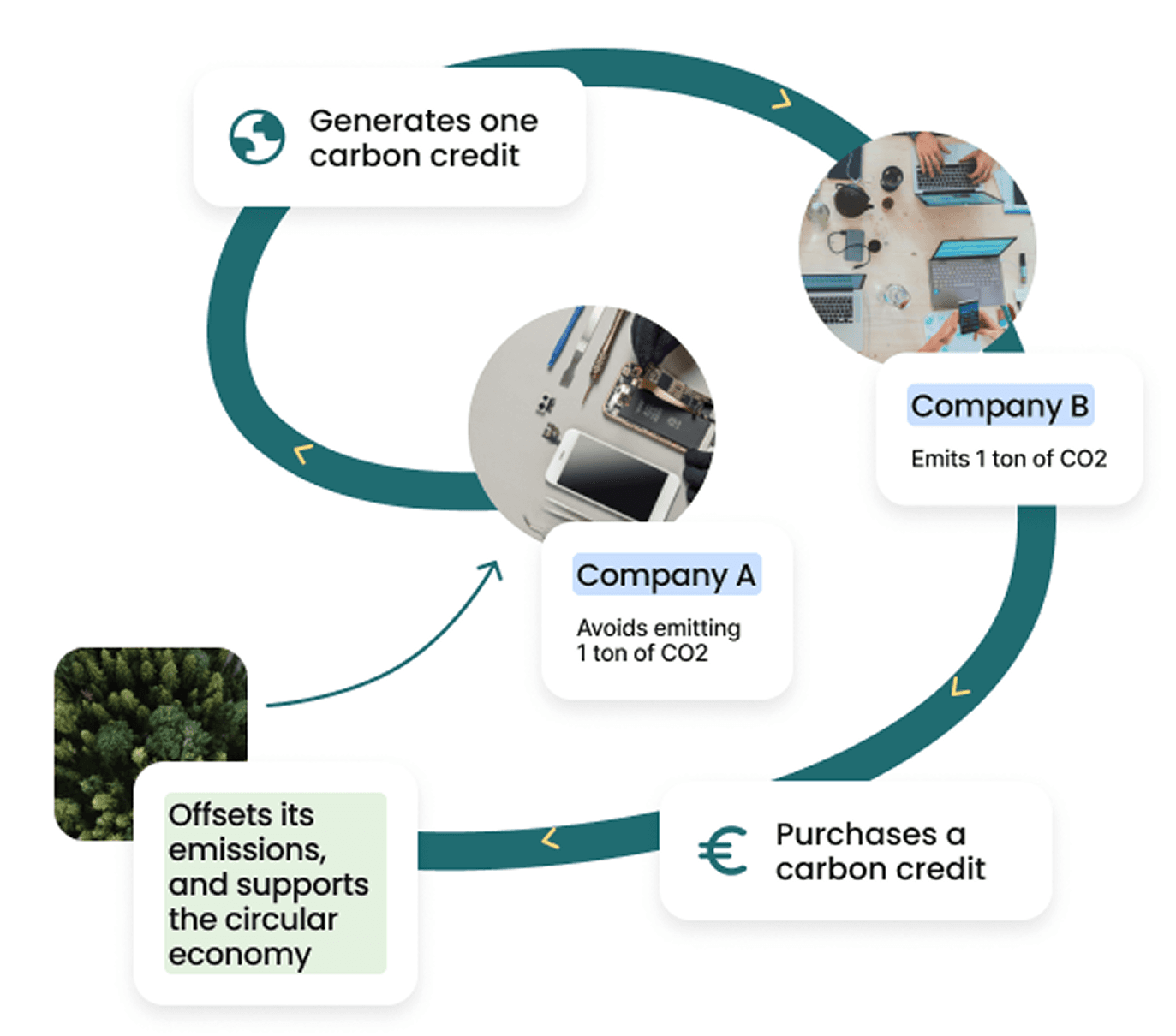
The Carbon Credit Mechanism – ©Recommerce Group
What Is a Carbon Credit?
A carbon credit corresponds to one tonne of CO₂ that has either not been emitted or has been removed from the atmosphere through a specific project.
It is a unit of measurement representing the positive climate impact of an action: preventing an emission, improving a process, extending a product’s lifespan, or restoring an ecosystem.
This mechanism aligns with the objectives of the Paris Agreement, which aims to limit global warming to well below 2°C (and ideally 1.5°C) compared to pre-industrial levels. All signatory countries have committed to progressively reducing global emissions to achieve carbon neutrality by 2050.
To ensure reliability and prevent double counting, carbon credits are strictly regulated: they must be measured, verified, and recorded following rigorous standards. This ensures that each credit corresponds to a reduction that is real, measurable, and transparent.
Understanding the three levers of carbon neutrality
Achieving carbon neutrality relies on three complementary levers. Each plays a distinct role in tackling climate change:
Lever A: Reduce generated emissions
This is the top priority. Companies must reduce their direct (Scope 1 and 2) and indirect (Scope 3) emissions as much as possible. No climate strategy is credible without substantial emission reductions at the source.
Lever B: Avoid emissions through an alternative model
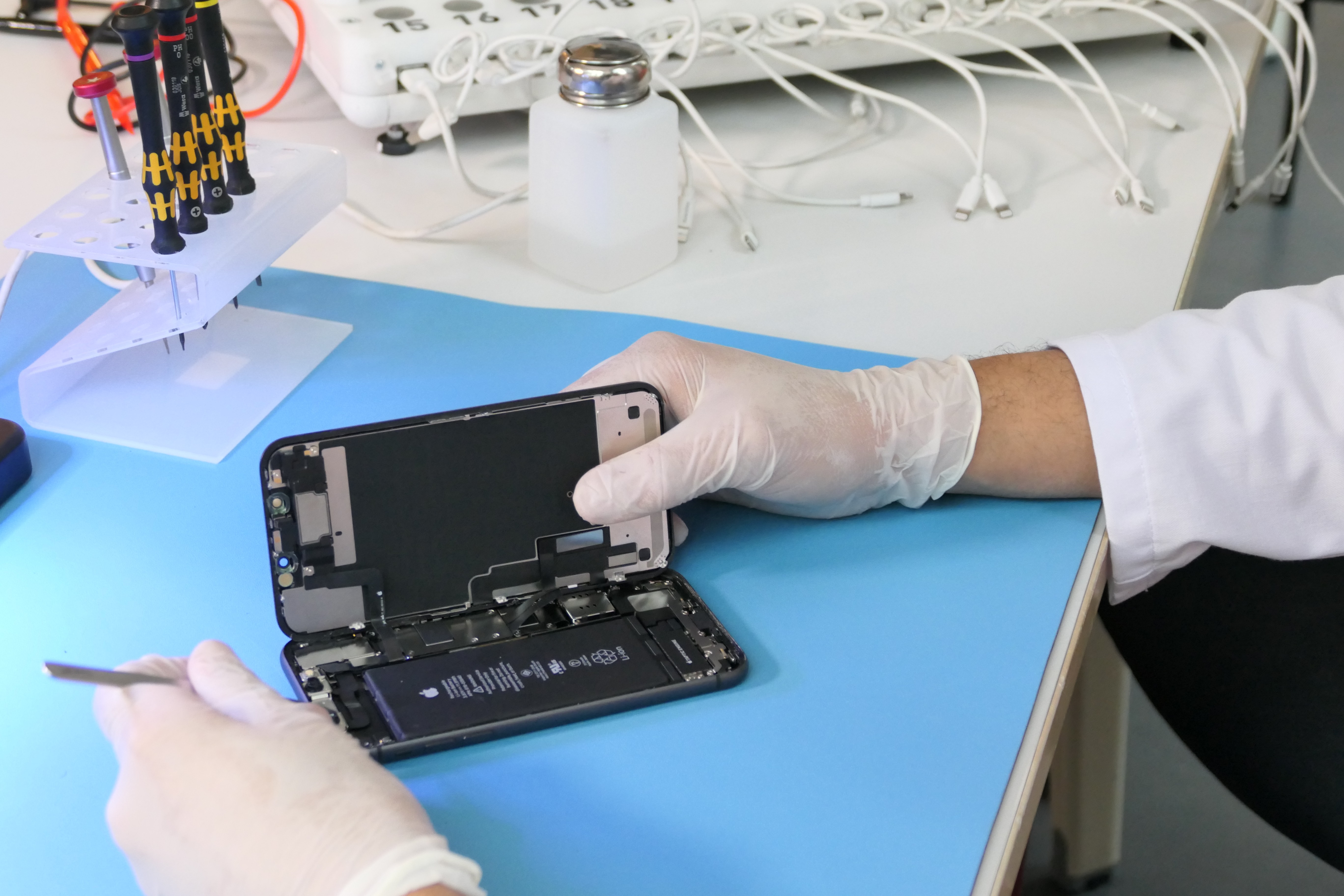
This lever involves developing products and services that prevent new CO₂ emissions from being generated. This is Recommerce’s core business: by refurbishing smartphones, we avoid the production of new devices and the significant emissions associated with them.
According to ADEME, a refurbished smartphone enables on average:
50 kg of CO₂ avoided,
154 kg of raw materials saved compared to a new device.
Emission avoidance offers several advantages:
Its effect is immediate,
It prevents the emission before it occurs,
It supports a more circular and durable economic model.
Lever C: Removing emissions already present in the atmosphere
This lever aims to remove CO2 already present in the atmosphere, through natural carbon sinks (planting forests, restoring mangroves) or technological sinks (CO2 capture and sequestration).
Which levers should companies prioritize?
Emission reduction (Lever A) is the first and indispensable action: every company must reduce its emissions as much as possible. Carbon removal (Lever C) comes next, capturing CO₂ already present in the atmosphere to compensate for emissions that cannot be avoided. Although necessary, this lever takes time (e.g., trees need decades to reach full storage capacity) and remains susceptible to natural risks such as wildfires.
Avoidance (Lever B) is a preventive measure: it stops emissions before they occur. A tonne of CO₂ avoided is a tonne that will never need to be captured later. This is the case for refurbishment, which prevents the substantial emissions associated with manufacturing a new device. Its impact is both immediate and long-lasting.
Recommerce carbon credits: a choice supporting the local circular economy
Avoidance is precisely the lever on which Recommerce bases its approach.
Our carbon credits directly stem from our core activity: smartphone refurbishment.
Every device we collect, repair, and refurbish prevents the manufacturing of a new one, and the significant emissions associated with it.
Why Choose Recommerce Carbon Credits?
Opting for carbon credits generated through refurbishment means choosing a solution with real, local, and immediately measurable impact.
A direct lever to reduce the carbon footprint of digital technology
By choosing carbon credits linked to the circular economy, you directly help reduce the carbon impact of a rapidly growing sector and support a concrete alternative to manufacturing new devices.
Supporting a local and circular economy
Revenue from our carbon credits strengthens our partnerships with local actors who collect, refurbish, and resell devices through short supply chains. It provides a direct boost to reshoring the digital industry, creating local jobs, and reinforcing European technological sovereignty.
These resources also allow us to increase the volume of refurbished products by improving processes for older models and spare parts.
Generating tangible social benefits
Your contribution goes beyond CO2. It generates direct social impact:
Inclusive employment: You help expand our partnerships with Social and Solidarity Economy (SSE) organizations and Adapted Enterprises (EA), promoting employment for people with disabilities or those far from the job market. Part of our sorting, logistics, and refurbishment activities is carried out through these structures.
Solidarity: You support our responsible and solidarity-based collection initiatives, extending the lifespan of unused products. One example is the REBOX program, created with the support of the eco-organization Ecologic and in partnership with Boulanger and Electro Dépôt. These retailers host collection boxes in their stores so that products can be collected, then refurbished or recycled.
A Guarantee of trust and transparency
Our carbon credits are not self-declared. They are based on solid, verified, and recognized measurements. Their impact is assessed using strict methodologies and audited by independent organizations:
Third-party verification: Conducted by Verifavia (Normec Group), a specialist in environmental auditing. This external verification ensures the accuracy and reliability of the data.
Aligned with international standards: Our approach complies with environmental regulations and follows leading frameworks (Science Based Targets, Carbon Trust, ICROA).
Based on the Rainbow methodology: Our credits are generated using the Rainbow framework, designed specifically for circular economy projects and providing strict rules for calculation, traceability, and verification of avoided emissions. This methodology is accredited by ICROA (International Carbon Reduction and Offset Alliance), ensuring the integrity and impact of your contribution.
Carbon credits: align compliance with strategic impact
Reducing carbon impact is a challenge for all companies. Even after significant reduction efforts, a share of emissions remains difficult to eliminate.
Recommerce carbon credits offer a credible solution to address these residual emissions while supporting a circular industry that creates jobs and long-term value. A choice that combines environmental impact, social utility, and a contribution to a more sustainable digital ecosystem.
Ready to give more meaning to your CSR strategy?
Contact our dedicated team: carboncredits@recommerce.com
Contact
Ready to join the circular economy?
Contact us to schedule a personalized demo or for any questions regarding our solutions and their integration.
RECOMMERCE GROUP is the leader in buyback, refurbishment, repair and resale of products in Europe. Thanks to a complete range of technological and innovative solutions, Recommerce puts its expertise in the service of all retailers, businesses, ecommerce and individuals, in order to create a pan-European offer of quality refurbished products.
© Copyright 2023-2026 • RECOMMERCE GROUP